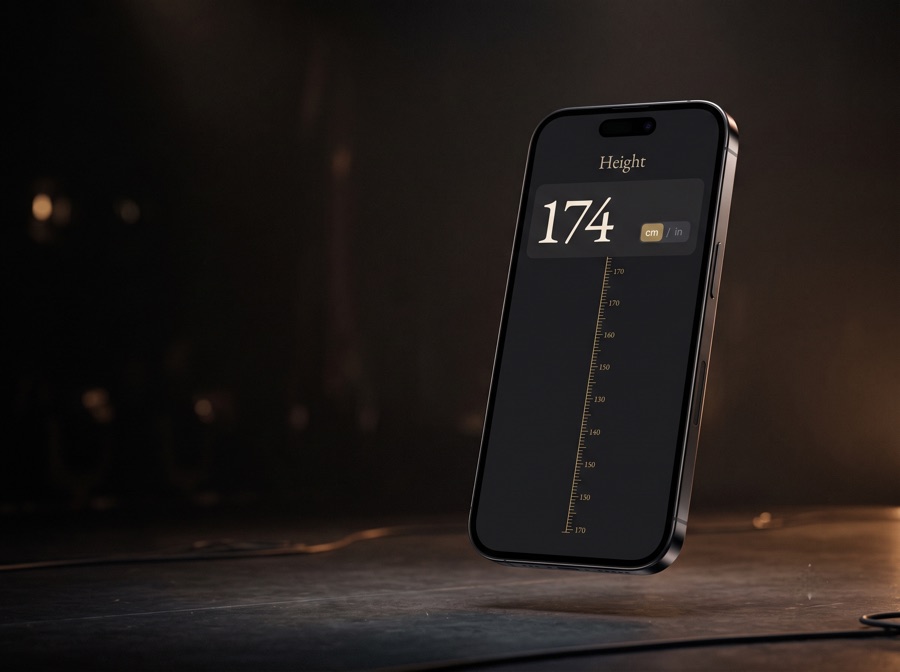
 step-height.jpg
01
Set the scale
Vision models see shape, not size. Your height anchors the whole scene to real-world units, letting every pixel be resolved into centimetres, with no calibration card and no reference object in frame.
For research use only
Not a medical or tailoring device. Measurements are estimates for research and evaluation, not for cutting fabric or clinical use.
SketchON turns an everyday lens into a body-measuring instrument. A neural pose model finds your skeleton, segmentation traces your silhouette, and a geometric solver converts that shape into wearable dimensions, all computed locally as you stand there.
How it works
Traditional body scanning needs a booth, calibrated optics and someone to operate it. SketchON replaces that hardware with models that run inside a single web page.
step-height.jpg01
Vision models see shape, not size. Your height anchors the whole scene to real-world units, letting every pixel be resolved into centimetres, with no calibration card and no reference object in frame.
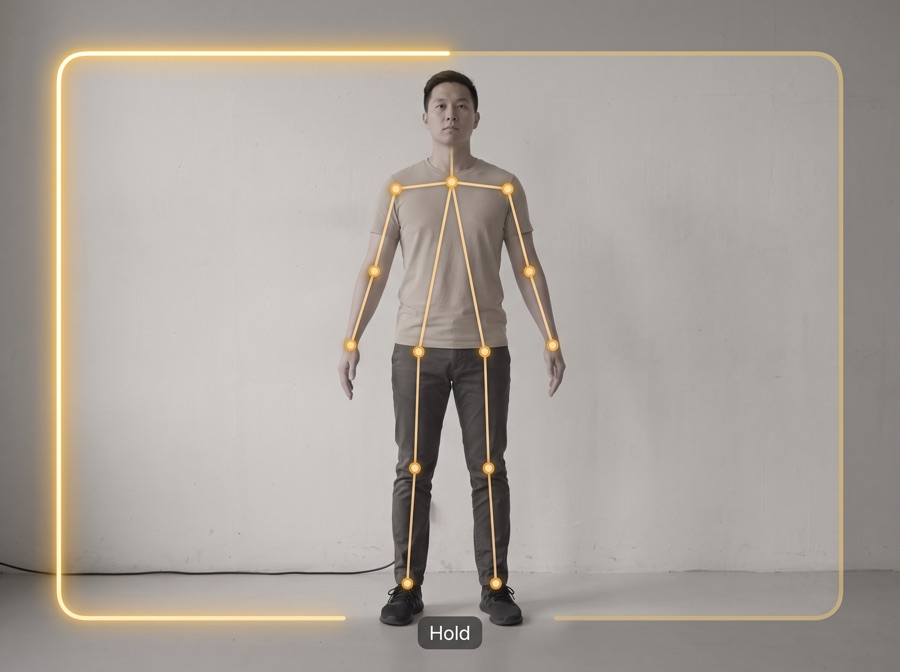 step-pose.jpg
02
A pose model tracks you live at full frame rate, scoring limb angles and framing against the capture guide. The shutter stays locked until the geometry is right, then fires on its own.
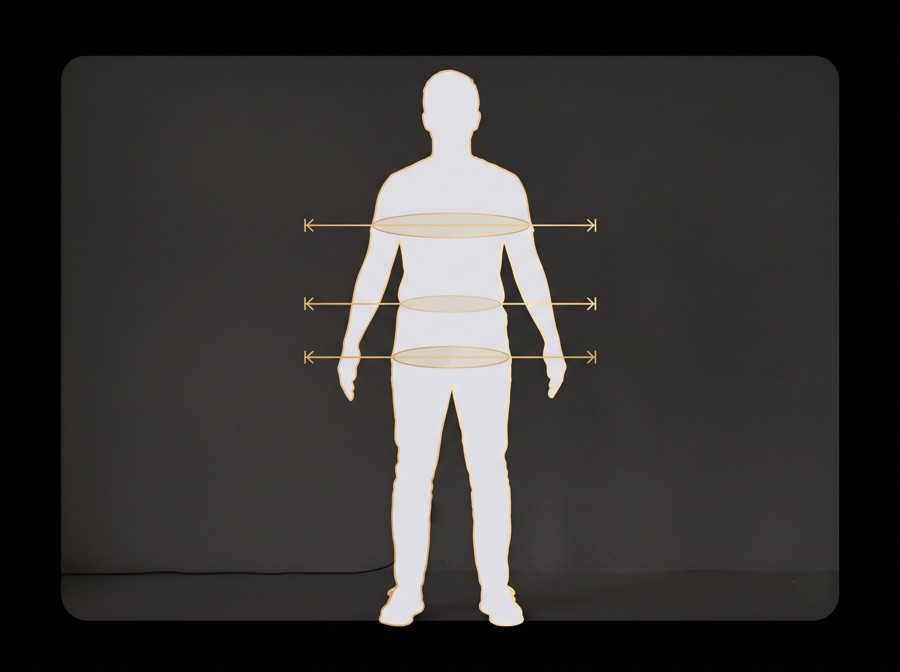 step-results.jpg
03
Segmentation lifts your outline from the background, the solver samples body widths at anatomical landmarks, and an elliptical model turns those spans into circumferences and lengths.
What you get
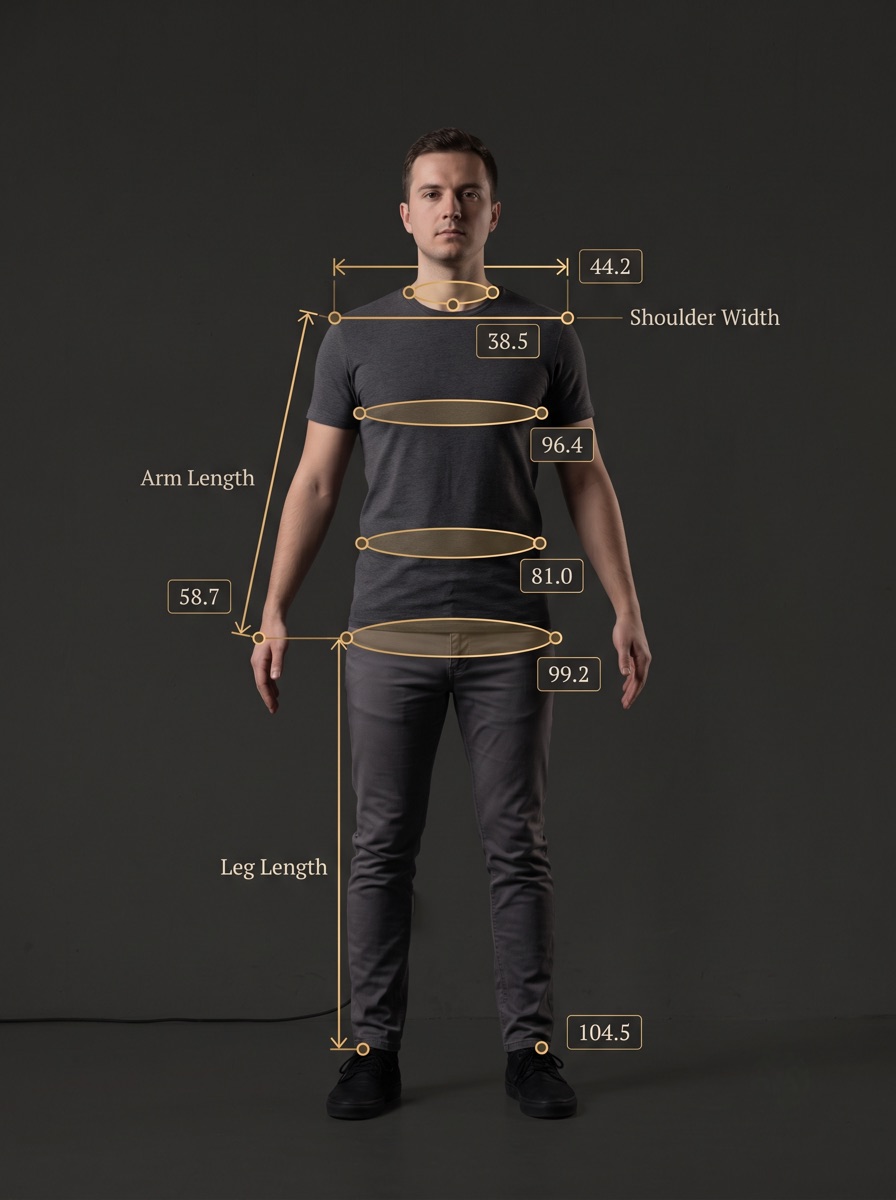
Circumferences are not guessed from a single outline. The solver pairs your frontal width with depth from the profile view and fits an ellipse through both, the same cross-sectional model a tailor implies when wrapping a tape. Every value is drawn back onto the frame it came from.
 annotated-scan.jpg
The annotated overlay, exactly as the app draws it.
Technology
A photograph records light, not dimensions. Turning one into wearable numbers takes a pipeline, each stage resolving a different unknown, from where your joints are to how your body curves away from the lens.
Pose estimation
A neural landmark model
Segmentation
Body separated from background
Geometry
Silhouette to circumference
WebAssembly
Inference where you stand
Loose clothing reads as body to a silhouette. SketchON watches for drape and flare in your outline before it measures, and tells you when a garment is standing between the lens and your true shape, so you can adjust rather than wonder.
Privacy
Most vision products send your images to a datacentre and ask you to trust what happens next. Running the models locally removes that question entirely. There is no upload to govern, because there is no upload.
Pose estimation, segmentation and the geometric solve all execute right where you opened the page. The pipeline needs no network connection to produce a result.
There is no profile to create and no credential to hand over. Open the page, set your scale, and begin.
You may choose to contribute a scan towards improving the models. That is the single path that transmits anything, and it asks you plainly before it does.
No booth, no operator, no specialist hardware. Just the screen already in front of you.